
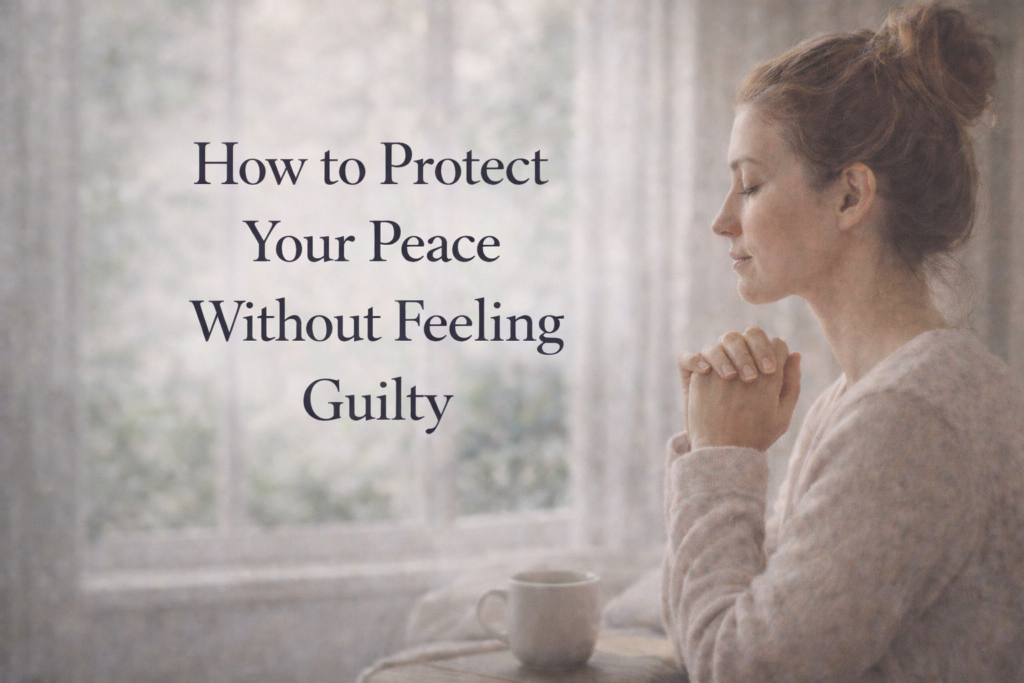
There comes a point in life when many people begin to realize something important:
Not everyone should have access to their peace.
You need to protect your peace.
It might be freeing to realize that, but it can also be uncomfortable.
Why?
A lot of us were taught that being a good person means always being there for others, listening, assisting, and saying yes.
We might have learned to put other people’s needs ahead of our own.
We may have learned how to deal with stress instead of avoiding it.
We may have learned to carry emotional burdens that were never ours to handle.
That kind of life can wear a person down over time.
The heart is exhausted.
The mind feels full.
And peace begins to appear like something far away instead of something possible.
That is why protecting your peace matters.
And no, it’s not selfish.
Why So Many People Feel Guilty for Wanting Peace
Many people don’t have trouble understanding peace.
They have a hard time letting themselves keep it.
They feel guilty about saying no.
They feel guilty for not stepping up.
They feel guilty for not taking every call, resolving every problem, or having every conversation.
Family expectations can sometimes make people feel guilty.
It may come from things you used to do.
Sometimes that happens when you’ve been the strong one for a long time and resting starts to feel strange.
But you don’t have to say sorry for peace.
You don’t have to go through a lot of trouble to get peace.
You don’t have to give up your own emotional health to show someone you love them.
That is not healthy love.
That is emotional exhaustion.
Protecting Your Peace Is Not the Same as Rejecting People
This is where many people get confused.
Taking care of your peace doesn’t mean you don’t care.
It doesn’t mean you’re cold, selfish, or don’t want to help.
It just means you’re understanding the difference between being kind and overdoing it.
You may care for someone without becoming caught up in their problems.
You can love someone without letting them use up all of your energy.
You can pray for someone without letting their choices take over your life.
That is wisdom.
And the Bible says to be wise.
Even Jesus Did Not Give Everyone Unlimited Access
We see love, compassion, healing, and service in the life of Jesus.
But we also see boundaries.
Jesus stepped away from crowds.
He went out to pray.
He did not respond to every person in the same way.
He was driven by purpose, not by pressure.
Luke 5:16 says:
“But Jesus often withdrew to lonely places and prayed.”
That verse is important.
It reminds us that taking a break is not a sign of failure.
Especially when your mind won’t rest.
Sometimes taking a break is the best way to get your strength back.
Sometimes you need to be quiet.
Sometimes the best way to protect peace is to stay away, be quiet, or get some rest.
If Jesus made room for that, you do not have to feel guilty for needing it too.
What It Looks Like to Protect Your Peace in Real Life
Protecting your peace is not always dramatic.
Sometimes it looks very simple.
It may look like not answering a stressful message right away.
It may look like ending a conversation that keeps going in circles.
It may look like taking a walk to clear your mind.
It may look like not explaining yourself to everyone.
It may look like saying, “I can’t take that on right now.”
Sometimes it helps to remember that just because someone is upset doesn’t mean you have to solve it.
That can be hard for people who care.
But the truth is that if you strive to do everything, you will soon feel emotionally drained.
And when that happens, even the beautiful things in life start to feel heavier than they should.
Why Guilt Often Follows Growth
Change can make you feel guilty because it feels strange.
People may notice when you start to set healthier limits.
Some people might not like it.
Some people would doubt it.
Some people may be used to having more access to you than was healthy.
That does not automatically mean you are doing something wrong.
Sometimes feeling guilty doesn’t mean you’re failing.
Sometimes it is just a sign that you are growing.
You are learning to respond in a different way.
You are learning to choose peace over stress.
You are starting to understand how valuable your emotional energy is.
At first, growth can be hard to deal with.
But pain isn’t always a sign of trouble.
Sometimes it means that something unhealthy is finally changing.
How to Protect Your Peace Without Hardening Your Heart
There is a difference between being at peace and shutting down emotionally.
Keeping your peace doesn’t imply being rude or distant.
It means being kind while also getting smarter.
You can still be kind.
You can still be compassionate.
You can still be loving.
But now you are learning to love with boundaries.
That means you should ask:
Is this mine to carry?
Do I have to figure this out?
Is this burden costing me too much peace?
Those are wise questions.
And they are important, especially during stressful periods when your head may already be overflowing.
Simple Ways to Protect Your Peace Without Guilt
Here are some useful ways to get started:
1. Take a break before answering
Not everything needs a quick response. Give yourself some time to think.
2. Stop offering to take on too much emotional work
You don’t have to deal with every problem you see.
3. Let short prayers steady you.
A simple prayer like “Lord, help me keep my peace” will swiftly bring your mind back to the present.
4. Accept that boundaries may disappoint some people
Just because they are upset doesn’t mean your boundary is wrong.
5. Keep in mind that peace makes you perform better.
When you are calmer, you reply with greater wisdom, not less love.
A Prayer for Peace and Wisdom
Dear Lord,
Please help me keep the peace that You are teaching me to value.
Give me the knowledge to differentiate what is mine and what is not.
Show me how to love other people without letting their worry get to me.
Take away the guilt that comes when I choose to rest, be quiet, and set healthy limits.
Help me walk in peace with a heart that is soft and a spirit that is strong.
Amen.
Peace Is Not Something to Feel Bad About
If you’ve been feeling guilty about wanting more peace, this is your reminder:
Being peaceful doesn’t mean you’re weak.
Being peaceful doesn’t mean being selfish.
You don’t have to say sorry for peace.
It helps you stay steady.
And in difficult seasons, steadiness matters.
You can protect the part of you that needs to relax.
You are allowed to create space from what overwhelms you.
You can choose wisdom instead of stress.
That is not rejection.
That’s growth.
🌿Continue Your Journey Toward Peace
If this message encouraged you, you can explore additional faith-based devotionals and printable resources inside the Peaceful Pathway® resource library.
These resources are designed to strengthen your faith, calm your mind, and help you protect your peace during difficult seasons.